Drowning in
|
Missing college students are turning up dead.
Either a serial killer is on the loose in the
Upper Midwest, leaving victims in area rivers --
or the Heartland is drowning in coincidence.
E-Mail:
vance@vanceholmes.com
Joseph "Joey" Labute Jr.

March 31, 2016
Several people are alarmed to learn of the circumstances surrounding the death of Joseph "Joey" LaBute Jr. Authorities in Columbus, Ohio have confirmed a body discovered in the Scioto River earlier this week is that of Joseph LaBute, who disappeared more than one month ago.
When last seen, the 26-year-old was at the Union Cafe in Columbus’ Short North neighborhood about 12:30 AM on March 5.
The Franklin County Coroner, Anahi Ortiz, used dental records to make the identification. Officials are awaiting toxicology reports to help determine cause and manner of death. Although the coroner reported finding no external signs of trauma, he noted that there was a high probability the victim was already dead when he went into the Scioto River.
Joseph LaBute, who most called 'Joey' or 'Joe,' was a 2011 graduate of Ohio State University and worked at Morgan Stanley.
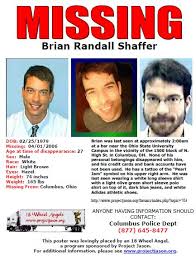 The disappearance of Joey LaBute recalls
the troubling case of another young Columbus,
Ohio man who vanished in April of 2006 and
apparently drowned: Ohio State University
medical student,
Brian Shaffer. The events
surrounding Shaffer's death were confusing,
confounding and deeply disturbing. Answers
were sought and never found. To this day the
case still haunts many, many people.
When Last Seen
March 31, 2016
A visitor to this site recently emailed, wanting to know if I thought a serial killer was still stalking college boys on campuses in the Midwest. I wrote her back a note, explaining that no such killer was ever proven to have existed and that, in any event, the suspiciously similar student drownings -- as described on my website -- had ended years ago. And yet, of course it's not over. The mystery has continued on in strange new ways. That correspondence prompted these reflections.
Serial Killer or Serial Coincidence?
Wishing to distance myself from crazy conspiracy theories, I am compelled to point out that the rash of Midwestern, male, college student serial killings or serial accidents -- or whatever it was -- has largely disappeared. While from time to time, there are news articles about a student partying with friends who goes missing and later turns up dead in a nearby river, the headlines are no longer routinely filled with such stories.
The unusually high number of wintertime, missing student "drowning" incidents stopped sometime around 2008. That was also . . . coincidentally . . . the year the FBI finally looked into the matter. The federal investigation found no evidence "substantiating the theory that these deaths are the work of a serial killer or killers."
Of course, a conspiracy theorist could say the fact that it suddenly stopped happening in 2008 proves that something WAS happening before then. The question is: What was "it" that was happening? The question was not a crazy one when first asked on this website in 2002 and it's not crazy today. I don't know that any of the cases detailed on these pages have anything to do with a serial killer. I know something was definitely happening. I know the number of nearly identical incidents was simply too high to be explained away as mere happenstance.
A Conspiracy in Context
Looking back on the (admittedly hysterical-sounding) question – Serial Killer or Serial Coincidence? – it seems important to define the different groups of included cases and the originally observed Missing/Drowned Student Mystery commonalities or profile points.
There are (at least) three sets of cases.
There was the group of missing/drowned male student incidents in Minnesota and neighboring states (along highway I-94) that happened in the winters between 2001 and 2006. There was also a 10-year string of similar cases in the La Crosse, WI area dating back to 1997. A third category includes a much wider set of missing/drowned student incidents -- mainly from the upper Mid-West, but also New York and other states -- that are thought of by some as potentially part of the "Smiley Face Murders."
While clearly not all of the dozens and dozens of mysterious deaths were caused by some nefarious ring of serial killers, certain facts and patterns have emerged over the years that show some of the student deaths were, in fact, homicides -- and some, possibly related.
Commonalities
Drowning in Coincidence
My initial interest in what became the Midwest Missing/Drowned Student Mystery dates back to the fall of 2002 --
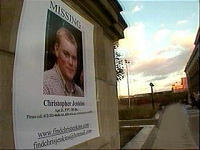
well before the David Paulides books and before the Smiley Face articles. It was prompted by the sight of a Minneapolis missing person poster announcing the disappearance of Christopher Jenkins. Though declared to have accidentally drowned, authorities would years later conclude that Chris was the victim of a homicide. Confirming suspicions long-held by many, Minneapolis police announced that they believed Chris Jenkins died after he was thrown off a bridge in downtown Minneapolis. Investigators said they'd identified a murder suspect and eyewitness to the 2002 killing of the University of Minnesota student.
Fourteen years after I began looking into this, there are inexplicable facts and confounding inconsistencies in many of the cases that remain agonizing mysteries. Some of the boys are actually still missing -- like Josh Guimond, who was last seen on the campus of St. John's University in November, 2002 and never heard from again. So, I am not prepared to dismiss it all away as serial coincidences and imaginary conspiracy theories. There are real families with real questions about their missing loved ones that have never been answered.
But again, whatever the cause of the identical Midwest mystery drownings, the good news is -- it stopped. That a broader set of similar, individual cases continue to periodically appear in the headlines is yet another, troubling, but entirely different mystery.
FBI Statement Regarding Midwest River Deaths
Washington, D.C. April 29, 2008
"Over the past several years, law enforcement and the FBI have
received information about young, college-aged men who were found
deceased in rivers in the Midwest. The FBI has reviewed the
information about the victims provided by two retired police
detectives, who have dubbed these incidents the 'Smiley Face
Murders,' and interviewed an individual who provided information
to the detectives. To date, we have not developed any evidence to
support links between these tragic deaths or any evidence
substantiating the theory that these deaths are the work of a
serial killer or killers. The vast majority of these instances
appear to be alcohol-related drownings. The FBI will continue to
work with the local police in the affected areas to provide
support as requested."
-- Supervisory Special Agent Richard J. Kolko, Washington, D.C.

Damien D. Sewell
February 23, 2015 |
The Search for Shane Montgomery
January 3, 2015
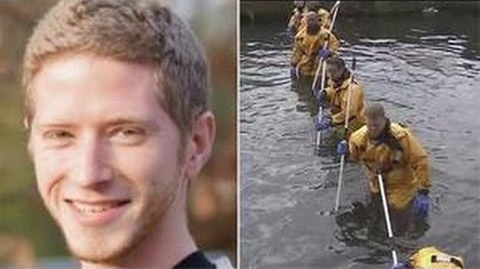
Karen Montgomery, the mother of Shane Montgomery -- a West Chester University of Pennsylvania student who disappeared on Thanksgiving 2014 -- stood near the bank of the Schuylkill River and spoke with reporters on January 3rd: "Today we have done what we promised. We found and brought Shane home."
According to news accounts, Shane, a 21-year-old senior at West Chester, had been out with friends until the early-morning hours of Thanksgiving but never made it home. His mother had said he was escorted out of Kildare's Irish Pub around 1:45 AM. Surveillance video confirmed that Shane was walking toward the Schuylkill River at that time, but nobody knows what happened afterward.
Divers found Shane's keys along the river on Dec. 21. Then on January 3, the FBI announced that a body had been recovered behind the Manayunk Brew Pub, less than a 10-minute walk from Kildare's. The discovery occurred in the same portion of the river where divers had concentrated their search in the five weeks since the student went missing.
Although neither the FBI nor any other authorities have suggested foul play was involved, the odd circumstances surrounding this case are troubling -- and tragic. I join the many, many people who mourn the loss of Shane Montgomery and deeply wish for Shane's loved ones to receive all the support they need.
|
|
|
University of Minnesota student,
December 20, 2013
Family members told Fox 9 their son was walking a girl home from a party and while walking back, he somehow ended up down the steep bank next to the bridge, possibly slipping and falling on the ice. No one can figure out how he got there, just that he couldn't get back up.
|
Remembering Nick Wilcox
March 29, 2013
According to NBC News, the body that Milwaukee Police officers "discovered floating in the Milwaukee River behind 1030 North Old World 3rd Street" Thursday, March 28, has been positively identified as Nick Wilcox.
Nick's family and friends never gave up on him and have been desperately searching for three months. Authorities have suggested that the manner of death was accidental. While it's inappropriate at this time to speculate about what may have happened, there are many unsettling aspects to this story. Hopefully, the search for answers will continue.
Nick's sister, Andrea Wilcox, shared with reporters the memory of her brother's smile. "He's got a big heart, a big cheesy smile," Andrea Wilcox said. "I'm going to miss that cheesy smile."

Milwaukee Mystery
February 4, 2013
Nick Wilcox, has been missing for over a month. Milwaukee Police have been very tight-lipped about the mysterious disappearance, only saying they have been following up on "several leads." Nobody seems to know what those leads are. Almost no information is being made available.
The 24-year-old University of Wisconsin-Milwaukee student had celebrated the New Year with friends at the Irish Rec Room, a downtown Milwaukee bar. Reportedly, Nick was kicked out of the bar and was last seen between 1 AM and 2 AM on January 1. Nick's family and friends began a comprehensive area search within hours.
"We searched milwaukee inside and out and there's been no trace of him," Nick's girlfriend, Kelly McGonagil, told reporters. "It's really frustrating." Divers searched the Milwaukee River and apparently found nothing. As days have turned to weeks, Nick's loved ones are pressing for search efforts to continue.
Nick Wilcox is 6'2", 180 pounds with blonde hair and blue eyes. When last seen, he was wearing a dark gray shirt with dark jeans and black shoes.

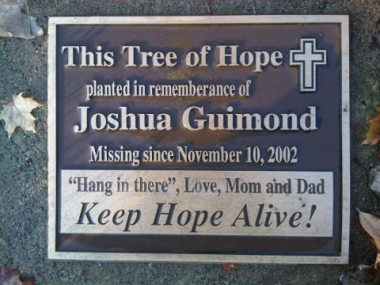
Josh Guimond Disappeared a Decade Ago
November 9, 2012
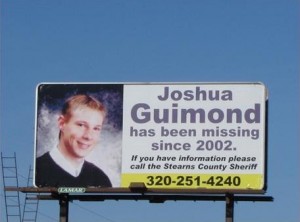
Ten years ago, Maple Lake, MN, student Joshua Guimond went missing from the campus of St. John's University in Collegeville, MN. The deeply disturbing Guimond case appears to be no closer to resolution now than on November 9, 2002 when he vanished during a three-minute walk back to his dorm from a friend's apartment. Josh's parents remain desperate to know what happened. Speaking to reporters after a weekend prayer service, Josh's mom, Lisa Cheney said, "Every day is hard to go through because you're always thinking about it."

Mourning the Loss of Tom Hecht
March 22, 2012
Searchers located the body of Tom Hecht. The Milwaukee Journal-Sentinel reports, "the body was pulled from the Milwaukee River near N. Water and E. Pleasant streets - about halfway between the bar where Hecht was last seen and his N. Commerce St. condo." The newspaper also noted "a police source said that the death appeared to be accidental and that there was nothing to suggest foul play."
This tragedy is very hard to comprehend. I am deeply sorry for Tom's family and friends. This appears to have been a terrible accident of some sort. I know it is very painful for those involved and so many, many people's lives have been touched by this. All you can do is cry and try to send the family your love and your hopes that they can recover and try to move on as best they can. What makes me saddest about this is the suddenness. My heart breaks that Tom's loved ones didn't even get to say good-bye and tell Tom how much they love him.
Tom Jaeck, a close friend of the Hecht family is quoted in an item from WTMJ. He was stunned by the events and told reporters, "I had to just sit back and was deeply, deeply saddened this afternoon." Mr. Jaeck, who aided in the search effort, says the Hecht family is in quiet seclusion.
The Tom Hecht website has a short, beautifully written posting, signed by "Robert, Shelly, and Chloe." Their message begins with the following: "Our hearts are breaking and our tears still flow. Tommy will forever occupy a special place in our lives." The post goes on to share some words which afforded me a bit of clarity and made me feel considerably better about the world. It reads simply, "The only word stronger than loss is love."
Tom Hecht will always be remembered, and he will always be loved by those who were fortunate enough to know him personally.
Missing in Milwaukee
March 15, 2012
Tom Hecht, a 28-year-old man from Milwaukee, has been missing since Saturday, March 10th at around 10 PM. He was last seen at Rosie's -- a tavern on Water Street in downtown Milwaukee -- after a pub crawl with friends. According to police, Tom Hecht was last known to be wearing a green t-shirt with a St. Patrick's Day inscription. Although authorities have not explained why, their search for the young man is focused on Milwaukee's riverfront area.
Articles and information at
WTMJ News.

What Happened to Eric Duffey?
March 6, 2012
Divers have recovered the body of Eric Duffey, the 21-year-old University of Wisconsin-Stevens Point student who had been missing since late Saturday, March 3.
Developing. . .
Still Searching for Answers in
the Disappearance of Dwight Clark
Missing Dwight
In an issued statement, Dwight's mother, RaeLyn Clark thanked the community, police, searchers and volunteers. It read: "The family of Dwight Clark, although deeply saddened, are thankful for the many prayers and well wishes over the past week."
Missing Clues
Officials have yet to comment on cause of death or the condition of the student's body when located.
Police spokesperson, Mark Young, opined out loud that the body had been in the water "for some time," indicating that police
will conclude Dwight had been in the bay since September 26 -- the night he vanished.
Missing Pieces
Having left the party and started on the short walk home -- how did Dwight end up a mile off? Everyone involved seems to agree that Dwight was not at all the type to suddenly venture
off alone on a late-night excursion. Did he have an encounter with someone on his way home that caused him to alter his path?
Finding Strength
Pennie Saum, a friend of the Clark family, said Dwight's mother is anxious and will not give up until answers about
Dwight's disappearance are found.
She told reporters RaeLyn Clark
will continue to "search for those responsible." Saum said, "In her heart of hearts she wants to know the story of what happened to him."
Missing
The True Story of
August, 2010
May 27, 2010
April 15,
2010
Strangely nasty e-mail sent to me on March 1, 2010 by
On Tuesday, February 16, La Crosse authorities
SEARCHING LA CROSSE
After a Week of Searches
Missing St. Thomas Student
It's About . . . TIME
October 7, 2010
Bellingham law enforcement officials confirmed Wednesday that a body recovered from Bellingham Bay was that of Dwight Clark.
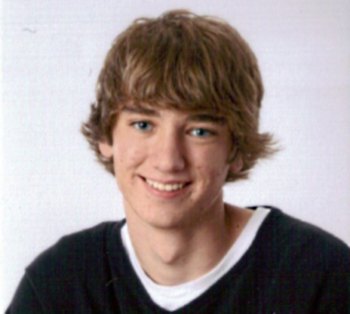
The heartbreak and loss Dwight's loved ones are suffering is unimaginable. Unbearable. The loss of so fine a young man is tragic, made even more so under circumstances that are utterly inexplicable. Many, many people feel the loss and have been profoundly disturbed by these events. One area resident commented that the entire community is saddened and confused.
However, it's a significant fact that the area where the remains were found had previously been searched, both by air and with dogs. Nothing was found. The searches had been called off.
Dwight Clark's body was not found by searchers. It was discovered "floating in a log lagoon" by a
contractor who happened to be working on the property. It's also significant that the property is heavily gated. The area is said to be "about a mile"
from the location of the party Dwight had attended.
Investigators have apparently ruled out the possibility of foul play. Nonetheless, something obviously went horribly wrong. The situation leaves Dwight's family, friends and classmates with an assortment of agonizing questions.
It has not been verified that the 18-year-old had consumed alcohol at the party. Whatever the case, perhaps he was just tired, got confused and became disoriented.
But then,
why would he travel to the dock? He can't have been but so tired and confused -- since he
maneuvered his way to a remote and fairly inaccessible location. How did he get to that particular area? And when?
Despite what may appear in finalized police reports, the investigation is far from over. Based on the dozens of emails I'm getting about the
disappearance and death of Dwight Clark, the case will never be closed until something or someone can
fill in the missing puzzle pieces and make sense of what has happened.
Western Washington
University Student
October 5, 2010
It's been more than a week now since Western Washington University student, Dwight Clark went missing.
Despite a massive search over the weekend, Bellingham police have found no leads in the case.
Dwight has not been seen or heard from since leaving a party at about 2 AM, September 26th. The Seattle Times reports:
The 18-year-old university freshman from Auburn disappeared after
leaving a party off-campus for a six-block walk back to his dormitory. There was one blank message
from his telephone early on Sept. 26, which police tied to a downtown location. His car had not been
moved from its parking space.
Dwight Clark has not been heard from since he disappeared. When last seen, he was wearing bluejeans,
a pink tie-dyed T-shirt and black Nikes. He is described as white, 6-foot-2 and about 160 pounds,
with brown hair and blue eyes.
For some reason, the search effort has apparently been put on hold.
Chris Jenkins
On August 6, Dateline NBC will devote the second
hour of their program to the Chris Jenkins story.
The website, Awareness=Answers reports on the reaction from parents,
Jan and Steve Jenkins. Jan Jenkins is quoted saying:
"This is the first time in seven and a half years that a story about Chris
will talk about his life as well as his death. We're so proud of our son and brother, and it has been
heartbreaking focusing on his death -- when in life, he was so full of energy, smiles, and a can-do attitude.
We hope some of the many people who know what happened that night do come forward. We also hope that Chris'
story brings awareness to all the young adult men found in water and their families who have suffered:
missing, murder, no investigation, and no justice."
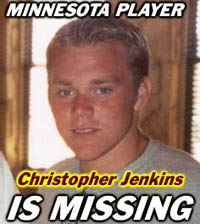
Jenkins poster - 2002
Joshua C. Guimond has been missing from the campus of St John's
University in Collegeville, Minnesota -- since November 9, 2002.
The college, which claims to be "inspiring lives," has never been
inspired enough to fully cooperate with the search for Josh. He is
still missing nearly 8 years later, and still missed by many people.
All concerned are asked to please contribute to the
Justice for Josh Fund.
Iowa State University campus police report they have found a
body inside of an "old farm building near campus." The body
is confirmed to be missing student, Jonathan Lacina.
Paul Munson
Criminal Justice Program Coordinator
Winona State University
This web site and the continuing grandstanding to make a national celebrity out of yourself and Gilbertson and others is despicable.
The last drowning in La Crosse this past week was another very drunk person, captured on video ALONE walking toward the river, and a single set of footprints on the ice leading to the open water. There has never been any forensic evidence supporting homicide in the La Crosse matters.
Unfortunately the irresponsible continuation of unsupported theories of a serial killer only serves to distract attention from people in the community from the real killer which is alcohol abuse.
Gilbertson's research is pure junk science. He finds patterns such as drowning between Thursday nights and Sunday as suggestive of a killer pattern. He should know as a college professor that the heavy drinking days are Thursday through early Sunday morning. Therefore this pattern is consistent with alcohol causation. Crime mapping assumes a crime has occurred supported by credible evidence. His mapping only shows a pattern of non-criminal behavior/events that repeat themselves. Certain roads also have higher than normal accident rates at the same spots and locations. That does not make the accident a crime event.
I have no problems with thorough investigation of deaths to look for EVIDENCE of homicide. In these cases, there is no evidentiary support for your work and theories. Maybe you should spend as much effort trying to stop the real killer---binge drinking and high risk behaviors by college age males.
Paul Munson
For the record . . . I am a private citizen. I am not a celebrity of any sort, nor have I ever attempted to make a single dime from this little website. I pay for it out of my own pocket. This page was created for my own personal reasons in reaction to events in my own community -- which then led to an ongoing blog of my own personal thoughts and questions.
located the body of Craig Meyers in the Mississippi River.

Craig Meyers
February 15,
2010
Disturbing news has hit La Crosse about Craig J. Meyers, a student at Western Technical College.
He's been missing since 2 AM Sunday. According to La Crosse police, Craig Meyers spent Saturday night at a
wedding reception and a few downtown bars.
No one has been able to locate the former West Salem High School state champion wrestler or any clues to his whereabouts. Authorities are debating whether
or not it would be too dangerous to search the icy river at this time.
Craig Meyers is 5-foot-6, 165 pounds with brown hair and hazel eyes. He was last seen wearing a black
leather jacket, a light-colored long sleeve shirt and dark pants.
The
La Crosse Tribune reports that, "Eight
college-age men drowned in area rivers between July 12, 1997,
and Sept. 30, 2006." The paper also notes -- with no apparent attempt at irony -- that an FBI review of the
serial drownings
found "no foul play."
Gerald Smith has Been Found
May 8, 2009
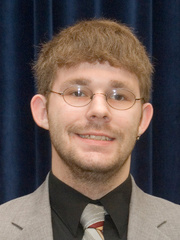
Indiana State University officials said 22-year-old Gerald Smith was celebrating the completion of a class project with friends at the Ballyhoo Tavern a few blocks from campus. The senior was last seen about 12:40 AM -- Friday, May 1 -- when he was reportedly asked to leave because he was intoxicated.
On Friday May 8, a body was seen in the Wabash River near Kimmell Park. Authorities identified the body as that of Gerald Smith.
"It doesn't make any sense," said David Robinson, a professor at ISU. Smith, a graduating senior with a major in insurance and risk management, was "a very good student" and "very reliable," Robinson said. The dean of the business school said Gerald was a great student, with a very promising future. The day Gerald disappeared, he had gotten news of a job offer. Dean Nancy Merritt said the campus, as well as the business department, is deeply saddened.
An autopsy ruled Gerald Smith's death to be an accidental drowning.

Found in the Mississippi River
May 1, 2009
A body discovered Friday in the Mississippi River was identified as University of St. Thomas freshman, Dan Zamlen. Despite 27 days of repeated searches on the Mississippi River bluffs, the student's remains were discovered on the bluffs near the Ford Motor Company plant while workers were performing routine cleaning and maintenance near the river.
St. Paul Police theorize Dan fell down the bluff and into the river the night he went missing, but no official manner or cause of death has been determined.
Hopefully after a thorough investigation some reasonable explanation for the disappearance and death will be found -- but currently the community is simply overwhelmed by a sense of confusion and terrible sadness.
Jeff Mauston, one of Dan's high school teachers says hearing the news has been very difficult for everyone. "You know, everybody knew Dan," said Mauston. "He was a kid that was in everything in High School . . . a three-sport athlete, just a straight 'A,' honor roll student and would do anything for you."
Missing in Minnesota
|
Daniel Zamlen
, an 18-year-old attending the University of St. Thomas, was reported missing early Sunday, April 5. He's described as 6 feet tall and 175 pounds, with blue eyes and blond hair. He was last seen wearing a blue jacket and jeans. |
NARROWING THE SEARCH FOR

EVIL HAPPY SMILEY FACE MAN
July 15, 2008
It may be a coincidence that at various colleges throughout the country, dozens of smart, athletic and popular male students suddenly vanished from sight while partying with friends near campus. It may be a further coincidence that the missing men were all later determined to have wandered off alone to a nearby river, accidentally fell in and -- apparently incapacitated by alcohol -- couldn't get out before drowning to death. But it's not a coincidence that at many of the different accident scenes, the same graffiti symbol had been scrawled depicting a "smiley face." Graffiti doesn't appear by accident, and the odds are astronomical of finding a painted "smiley face" in so many unrelated locations.
When something occurs the first time, it's a happenstance. If the same thing occurs again, it's a coincidence. At the third occurrence, it's a pattern.
To be sure, the matching graffiti may not have anything to do with the actual cause and manner of death in the matching missing person cases. Obviously the symbols are not just an accidental coincidence. However, anyone could've left the distinct markings at any time -- for any reason. Detectives Gannon and Duarte, the retired police officers who traveled the country and came upon the signs, have reported very few details about their findings. Maybe they were only seeing evidence of a sick joke. While not very likely, some person or group of people who had researched these mystery drownings could have arranged to mark the scenes some time after the deaths.
Based on what little the detectives have revealed, it would appear equally unlikely the strange graffiti markings represent a nationwide gang of serial killers. The significance of the findings is impossible to judge without knowing the extent and credibility of this new evidence. Graffiti only appears in about a quarter of the cases Gannon and Duarte insist are related. The detectives have said they also discovered 12 other matching symbols, similar to "gang graffiti." But the evidence they say could tie 40 or more cases together has not been publicly discussed.
So at this point, the sinister "smiley faces" are a mystery within a mystery, or more precisely -- a pattern within a pattern.
Recently however, Kristi Piehl at KSTP-TV has posted another important break. Piehl's story concerning the case of Josh Szostak from Albany, NY who went missing in December of 2007, infers that enough evidence has been gathered to effect an arrest in the matter. What the evidence is or how it may relate to other mysterious river deaths is still not clear.
From the KSTP article:
Since then, [Josh Szostak's dad,] Bill Szostak has worked countless hours investigating his son's death. After our story aired on Good Morning America, Bill began talking with retired NY Detectives, Kevin Gannon and Anthony Duarte. Bill told me today that Gannon and Duarte have determined that Josh was murdered as part of the Smiley Face Killings. He said, "all the factors are present." He won't talk specifically about the evidence, but he isn't just convinced he could get an arrest, he says they are close to having enough evidence to get a conviction.
Bill is now teaming up with Gannon and Duarte to work on Josh's case and others. He told me he has started his own corporation and has the paperwork ready to go. His website isn't ready yet, but it will be soon: smileyfacevictimsfund.
The petition that Bill launched in an effort to get the FBI to launch a nationwide investigation is also on that site. The parents of the drowning victims have teamed up and are circulating a petition (PDF).
"When medical personnel are
trained in the diagnosis of problems,
they are often told this story.
'When you hear hooves behind you,
when you turn around you should
expect to see horses -- not zebras.'"
-- from the webpage, Death Myths by Betsy Morgan, Ph.D
and Kim Vogt, Ph.D. of the Univ. or Wisconsin, La Crosse
"The level of evil we are dealing with here
is rampant. It's deep and it's widespread."
-- Jan Jenkins, mother of Chris Jenkins
SIGNS OF FOUL PLAY



April 28, 2008
Stunning reports about possible serial killings in connection with
the Midwest Missing Student Mystery are currently being aired by
ABC TV's Twin Cities affiliate, KSTP.
None of the dozens of disturbing, apparent drownings documented on this website were ever handled by police as possible homicides. The nation's investigators went missing primarily because, in each instance -- once the missing student's remains were recovered from a nearby river or lake -- authorities would determine there were "no signs of foul play."
The agonizing phrase "no signs of foul play" -- which surfaced in virtually every one of these deaths -- meant the investigation would be aborted and abandoned with the same final conclusion: the student must've accidentally gotten too drunk, accidentally gotten lost near a river, and then accidentally drowned. Of course, this was despite the fact that authorities consistently found no signs of an accident.
For the missing young men's loved ones and others concerned about of the string of strange deaths, "no signs of foul play" were essentially code words meaning: Blame the victim for being recklessly drunk -- and close the case.
The single instance where the cause of death was changed from "accident" to "homicide" was the 2002 disappearance of University of Minnesota student, Chris Jenkins. Chris' parents, Jan and Steve Jenkins were absolutely unwilling to accept the official explanation of a drunken accident. They persistently pursued answers and tirelessly took up their own private criminal investigation. In 2006, the Minneapolis Police Department was confronted with new evidence and forced to admit they'd made "assumptions that led them to miss things" which resulted in a series of dreadful mistakes.
Though in no way personally related to any of the missing students involved -- retired NYPD detectives, Kevin Gannon and Anthony Duarte had also taken a personal pledge to piece together this puzzle. Initially prompted by the 1997 disappearance of Patrick McNeill in New York City, they set about to thoroughly examine his case, Chris Jenkins' case, and many of the other remarkably similar but isolated incidents.

Gannon and Duarte, seeking nothing but justice, dedicated themselves to maitaining a private investigation into the whole murky mystery. And unlike the professional fly-by from the F.B.I. -- these volunteers vowed to stick with it and never give up. Mr. Gannon told reporters, "We've been doing this on our own -- our own finances. We've never taken a penny from any of the families. I personally have mortgaged my own home to investigate this."
The retired officers traveled around the country to explore each so-called drowning site, taking particular note of the exact spot where the student would've first entered the water. Not only did they find different signs of foul play in the different locations, they found the same sign in the different locations: a crudely scrawled version of the "smiley face." The detectives first encountered the symbol at a site in Wisconsin eight years ago, and subsequently located it at sites in Ohio, Pennsylvania, Indiana and Iowa. They are now openly stating their belief that the "smiley face" images left at various, seemingly random death scenes are a unique signature -- and a sign of serial killings.
Gannon and Duarte have also concluded that this is a "nationwide criminal enterprise" involving more than one murderer "Because there's such a wide range of states the killings are through" said Gannon. "Besides the fact that we have multiple victims on the same night."
"I think it is a serial killer,
but not one individual.
I would just say, a group of individuals,
probably located in more than one state."
-- Anthony Duarte

At one site in Michigan the detectives discovered graffiti they determined was likely left by the killers which -- among other things -- included the cryptic word "sinsiniwa." The meaning and significance of "sinsiniwa" remained a mystery until months later, when they came upon the same word in a different state. Traveling to Dubuque, Iowa to probe into the death of Matt Kruziki, the detectives learned that bloodhounds had tracked Kruziki's scent to the corner of a particular avenue near the Mississippi River: Sinsiniwa Avenue.
"We believe they were specifically leaving a clue for us, or anyone who was paying attention to these drownings, that the cases were ultimately linked," Gannon told KSTP.
Many details of the monstrous findings are being withheld from the public, but Gannon and Duarte are confident they've uncovered a concrete link between the Jenkins case in Minneapolis and the deaths of at least 40 other men -- in 25 cities involving 11 states. Gannon offered, "If nothing else, we have to warn the families and the young individuals so that no one else becomes a victim." Duarte added, "Other kids are at risk, yes, it's very frustrating."
At this point in their noble -- and undoubtedly nightmarish -- search for the truth, the two retired officers are simply searching for help. Gannon explained, "Right now really, we're out of finances and really can't do any more on the cases. In fact, we looked at 89 cases in totality. We knocked out 30 right away and there was 19 cases that we haven't even done yet -- and out of those 19, it looks like at least 10 or 15 of those could be connected."
"We knew it wasn't suicide.
It was one of those things where he
walked out and was never seen again."
-- Jackie McNeill, mother of Patrick McNeill
"Chris was abducted in a cargo van. He was driven around Minneapolis
for hours and tortured. He was taken down to the Mississippi River and
he was murdered. And after that -- his body was positioned and taken to
a different spot and then to a different point in the Mississippi River."
-- Jan Jenkins
Missing in the Headlines
November 14, 2007
Midway through the Fall school term, there have been no news items about a male college student who vanished while partying with friends and was subsequently found dead in a river. No news . . . would be good news, but two related stories have surfaced in the press: reports of Indiana State University student, Scott Javins whose remains were recently found -- and the story of Gainesville State student, Justin Gaines who recently went missing.

Justin Gaines
Police in Gwinnett County, Ga are searching for 18-year-old, Justin Gaines, who has been missing since Thursday, November 1. The Atlanta Journal is reporting the student was at home in Duluth on Thursday. Of course that's the Duluth in Georgia, not Minnesota. Nonetheless the disturbing story is important.
According to a Police statement, Justin told his mother he was going out to a bar. He later called to ask a friend to pick him up from Wild Bill's Entertainment Hall, but the friend was unable to get him. Nobody has heard from Justin since. Gaines is a freshman at the Oconee campus of Gainesville College, said his mother, Erika Wilson.
Ms. Wilson thinks her son likely had several alcoholic drinks at Wild Bill's. "I don't know if he left with someone or if he tried to crash there, but it's not like him not to come home," she said. "I haven't slept in days . . . I'm going out of my mind."
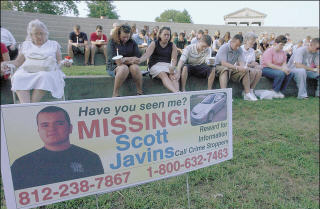
Scott Javins was 20-years-old when he went missing. He disappeared in the early morning hours of May 24, 2002, after attending a party with friends. Last month, on October 12, 2007 Indiana's Tribune-Star reported:
"For the past five and a half years, Javins' family members have sought local and national media attention to help find Scott. Police say it was a tip Friday morning to the Indiana State Police Special Investigations . . . that led them to search a section of the Wabash River near the eastern bank, just south of Fairbanks Park and the Terre Haute Family Y. There, Indiana State Police divers located a car matching the general description of Javins' 2002 Honda Civic Si."
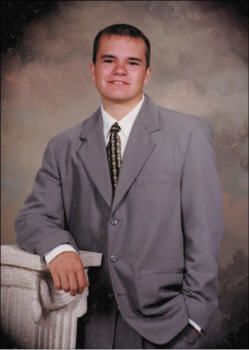
Scott Javins
Though they won't reveal exactly why, investigators are now handling the case as a homicide. Scott's parents, Merv and Doreena Javins, said the discovery of their son's remains inside his car in the Wabash River is a first step to bringing them closure -- but that many mysteries remain. "At about 4:30 this morning, it was just like I heard a voice and it said, 'Dad, I'm home,'" Merv Javins said Sunday, October 14, "Now we're hoping we can find an answer to exactly what happened that night."
Nowhere to Be Found
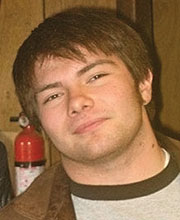
Abel Bolanos
April 5, 2007
The last time anybody saw Iowa State University sophomore, Abel Bolanos, he was at a party having a good time. Friends recall he left the party and headed home very early on the morning of April 1. He was believed to be walking the short distance to his residence hall sometime around 4 AM.
When the 5-foot-7, 165 pound student couldn't be located later that day, family and friends were perplexed. They described Abel as funny, likable, trustworthy -- "a really nice guy." It simply wasn't like him to wander off without leaving word. Local authorities immediately understood the situation and responded quickly. Without delay, they began searching -- but found nothing.
Classmates said Abel's disappearance was particularly strange given his passion for school. The 19-year-old was attending Iowa State on an academic, four-year, tuition scholarship. Something had gone terribly wrong, and volunteers and rescue teams were soon summoned to broaden the search. On Monday, groups of Iowa State University students fanned out and began looking around campus buildings and residential areas. They went door to door asking residents whether they had seen Abel -- but he had disappeared without a trace.
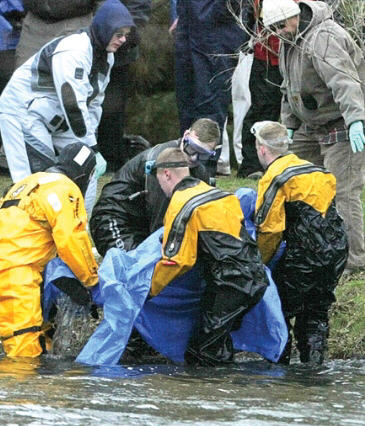
The mystery of the student's whereabouts ended shortly after 6 PM on Tuesday April 3 when a body was found in Lake LaVerne. Paramedics assisted divers as the corpse slowly emerged from the water under a blue tarp.
"Upon recovery, the body was examined and was positively identified as that of Abel Merlos Bolanos," said Iowa State Police Commander Gene Deisinger. "We are grief-stricken by the results," said a written statement by the family, read by Deisinger.
What could possibly have happened to Abel? Autopsy reports may eventually yield some answers. Officer Deisinger said there are no "obvious signs of foul play" but commented, "Cause of death has not yet been determined and the case remains under investigation."
Reportedly Abel was drinking at the party, however no one recalls him being upset or out of sorts in any way. How did he end up near the water? "How he got to the Lake LaVerne area is one of the several things under investigation," Deisinger said.
On Wednesday, April 4, friends at Iowa State mourned the death at a candlelight vigil in remembrance of Abel Merlos Bolanos.
The Truth About Chris Jenkins
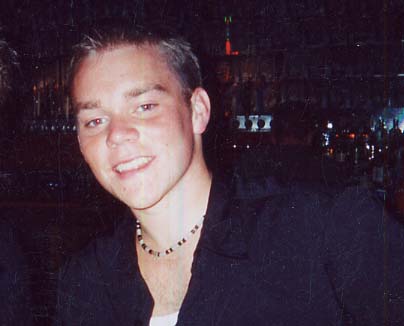
November 20, 2006
Speaking to stunned reporters at a news conference, Minneapolis Chief of Police Tim Dolan said, "Sometimes we make mistakes. In this case, we made a mistake."
Perhaps nobody will ever know exactly how or why Chris Jenkins died, but we can certainly now say his death was not a fluke accident. Chris did not just get drunk and clumsily stumble into the river. He did not suddenly forget about his family and friends, wander off, and drown by mistake. It is not true that he killed himself. Chris Jenkins did not commit suicide.
Confirming suspicions long-held by many, Minneapolis police announced that they believe Chris Jenkins died after he was thrown off a bridge in downtown Minneapolis. Investigators said they'd identified a murder suspect and eyewitness to the 2002 killing of the University of Minnesota student.
Steve Jenkins told reporters he and his wife, Jan Jenkins, were "shocked" when they learned the case was being reclassified as a homicide.
One can only imagine their horror and grief. But instead of withdrawing, Chris' mother and father have spoken up, as they have for four agonizing years. They spoke calmly and with compassion. With no trace of bitterness or anger or irony, Steve and Jan Jenkins thanked the police. Their grace at such a moment is the definition of dignity.
After years of focusing on the many possible mistakes made by the murder victim, Chief Dolan has now confessed officers made "assumptions that led them to miss things" and to make a series of mistakes. Doubting Chris Jenkins' integrity was more than a mistake. The willful ignorance and dismissive refusal to investigate Chris' death prolonged and compounded his family's tragedy.
Despite opposing opinions from officials, Steve and Jan Jenkins always maintained there were signs of foul play, eventually being forced to conduct private investigations and track down their own leads. The painful search into their own child's story led them to reach out and help other parents in similar situations.
Chris Jenkins' integrity speaks through the integrity of his parents. There's no mistaking it.
In some sense, Chris was denied the dignity of his own death. Rumor, suspicion and doubt all served to rob Chris of the trust he deserved, and to cheat his loved ones. The situation was so dark and backward, official news of the young man's homicide is oddly a step forward into the light.
Steve Jenkins commented, "We knew it was foul play from the very moment. So there's a sense of relief, but it's a double-edged sword -- it does not bring Chris back."
Chris disappeared from the world. He was here, then he was gone, and he never came back. His body was eventually found, but somehow he never came back -- he was still missing. Now, for many, I'm sure it seems as though he's gone all over again.
But this time there is no reasonable doubt about Chris himself. He did not disappear in a drunken haze and mistakenly drown sight unseen. Someone else was involved. Someone did something to Chris to cause his story to end in the Mississippi river. There are no specifics, but the basic truth of Chris' story has been recovered. His integrity has been restored, and we now know he was the victim of a terrible crime.
Chief Dolan and his investigators may or may not ever solve this four-year old homicide, but the conspiracy theories and nonsense can finally be laid to rest. The many mistaken voices of denial and derision have been silenced, and at long last Chris Jenkins has been afforded a measure of dignity.
In an interview, Jan Jenkins looked upward saying "Chris, today it's your voice that is being heard."
Something is Finally Being Done
"So attention must be paid. He's not to be allowed to fall in his grave
like an old dog. Attention, attention finally must be paid to such a person."
-- Willy Loman's wife, Linda in Arthur Miller's "Death of a Salesman"
October 18, 2006
For years, concerned citizens have commented, complained and cried about a series of mysterious student deaths labeled "drownings" and filed away as unfortunate but coincidental accidents. For years, those painful cries have been laughed off -- or worse yet, simply ignored. It's one thing to investigate and dismiss baseless theories -- it's another to shrug off the deaths of dozens of young men.
As far back as 2001, there was wide-spread speculation that the many cases were related. With each new awful death, suspicion and frustration moved closer to fear and anger. Soon the talk became about a possible serial-killer, or copy cat killer stalking college campuses in the Midwest.
How many boys have strangely gone missing only to turn up dead in the river? Impossible to know. It all depends on what parameters you set, what you consider "strange," and how far back you go. Certainly, there have been 8 unsettling cases in the last 9 years -- and that's in the La Crosse area alone.
Looking at cases spanning the midwest, St. Cloud Minnesota professor, Dr. Lee Gilbertson, estimates a number between 26 and 30.
Needless to say, even one student's mysterious drowning is one too many and should be addressed by authorities. As Arthur Miller wrote in Death of a Salesman, "Attention must be paid." But obviously, an on-going series of eerily similar disappearances warrants a full -- on-going -- investigation.
The road is long indeed that never bends. Finally, a multi-agency review of the cases has begun. I sincerely hope this investigation brings some comfort to the many families, friends, students, and troubled on-lookers who want answers.
Speaking personally -- all I've ever wanted is for someone to pay attention. I've agonized at the thought of these men's deaths, and the thought that nobody in authority was looking into them. The one commonality I was certain of, was that all these identical drownings were being ignored and written off as "coincidence."
When family members have a gut feeling that something's not simply an accident -- police owe it to them to pay some attention. When a whole community of people have an unshakeable feeling that the mystery deaths will continue -- the authorities have to pay attention -- or be blamed for their willful ignorance. At long last, attention is being paid.
Excerpts from October 16, 2006 reports from WXOX -- Channel 19 News.
http://www.wxow.com/News/index.php?ID=3981
A St. Cloud Minnesota professor started digging deeper into the drownings here and other towns along the river, including St. Cloud. He specializes in computer mapping of crime. He found four patterns in 26 deaths that astounded him.
La Crosse county medical examiner John Steers has contaced all the police agencies involved and invited them to participate in a multi-agency review of the cases.
"I plan on gathering all the autopsy reports, gathering all the police reports, talking to the agencies that are involved, and seeing if I can come up with any similarities or something that may draw my attention to someting that we didn't know about, or if possible, eliminate the theories of a serial killer."
Steers says he still believes the only serial killer at work here is alcohol. But concedes if someone is pushing drunk college kids in the water . . . there may be no signs of foul play.
http://www.wxow.com/News/index.php?ID=3999
La Crosse County Medical Examiner John Steers admits he doesn't know what he'll find, if anything, and he is getting some grief for his review. But he's also getting some praise.
The family of Chris Jenkins, a University of Minnesota student who drowned back in 2002 even thanked Steers for his efforts.
Steers says, "He called me a hero basically because he said I'm the first public official whose actually taken the time to review all the cases and take time to look at them, not just write them off as a drowning and I'm not saying I'm not writing them off as drownings, but I want to keep an open mind."
"I think there is someone out there. And I believe we can find him."
-- Dr. Lee Gilbertson
Dr. Lee Gilbertson, a St. Cloud State professor who specializes in the computer mapping of crime, has uncovered at least four startling coincidences among many of the missing/drowned victims:
Victims tend to vanish between Thursday 10:00 PM and Sunday 4:00 PM, during the first half of the month.
76% of the specific disappearances investigated, occured when "there's less than half of moon illumination."
The victims were attending college within 50 miles of I-94 between Moorehead and East Lansing. "Why is it so tight along that snake -- along I-94? It should be spread out."
The timeline of the drownings move in a consistent pattern. "East, west, east, west, east, west, north, south -- east, west, east, west, east, west, north, south. Now we start to see patterns that can't be explained."
"Now we can clearly say, it's definitely time to act."
-- Gilbertson
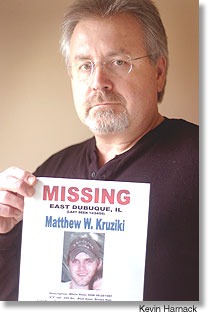
Missing Matt Kruziki
Matthew Kruziki wasn't dead -- he was just missing. When he was last seen on Christmas Eve 2005 at about 1:00 AM, Matt was in front of a bar called, The Other Side. Suddenly he was gone. And days later, when he failed to make contact, his loved ones were worried sick.
Many at Arrowhead High School remembered the popular 2000 graduate quite well and hoped for the best. Principal Bonnie Laugerman said, "he was widely connected, had a lot of friends and was socially involved."
Matt's dad, William Kruziki, described his son as "a real sensitive kid." He told reporters Matt traveled to Dubuque, Iowa, in early December 2005 to distribute information on health care equality at the University of Dubuque through the Association of Community Organizations for Reform Now. ACORN is a national community group representing low- and moderate-income families.
Bill Kruziki said Matt planned to use his knowledge of non-profits to seek a degree at the University of Wisconsin-Milwaukee. He quoted his son as saying, "I just want to make a difference, do something good for those less fortunate."
Apparently Matt wanted to follow in his dedicated father's footsteps. Bill Kruziki is a U.S. marshal for eastern Wisconsin and a former Waukesha County Sheriff.
GMToday.com reported:
The night of December 23, Kruziki was separated from a friend -- only identified by police as a fellow Hartland man -- who stayed inside the bar after a disagreement over a bill. On a 20-degree night in a city two hours from his hometown, Matthew Kruziki stood outside with no jacket, no cell phone, no wallet and no means of transportation.
He was told by police after requests from bar owners to return to his hotel. That hotel -- the eight-story, 166-year-old Julien Inn -- was more than a mile away via a walking bridge over the ice-covered Mississippi River.Matt Kruziki's mother, Debbie, brother, Chris, and many, many others held out hope and searched, but feared the worst. Matt was the second Arrowhead graduate to go missing near the Mississippi River. For a time, Matt and drowning victim, Jared Dion, were Arrowhead varsity wrestling teammates.
Months went by with no news. Then on Saturday, March 18, 2006, a water plane pilot flying low over the Mississippi River in Illinois noticed a body floating in the water.
After an autopsy, the family was told Matt must've accidentally drowned during a night of drinking. This was the same explanation officials had told so many other grieving parents with sons who had vanished in the same way. But Bill Kruziki is one official who was not content to leave it at that.
"I just can't stand to see another incident like this happen and everybody sits back and 'Well, there's just another kid that went out drinking and died,'" Kruziki said. He called for a federal task force to review the entire string of drownings.
"Something has to be done other than just saying it's an accidental drowning because of alcohol," reasoned Kruziki. "That's too easy. Something else has to be done."

Thanks to Bill Kruziki, to determined parents, relatives, and loved ones of the many victims -- and thanks to a caring community -- something is finally being done.
Matt has made a difference -- a real difference -- and the reality of his dreams for a better world, live on.
Drowning Cases to be Investigated
http://www.themilwaukeechannel.com/video/10070234/detail.html
The La Crosse Serial Killer
October 9, 2006
Two years ago, Police Chief Kondracki complained, "I just hope we don't have to keep revisiting this serial killer thing because it retracts from the progress we're making."
A make-shift memorial to Luke Homan sits at the foot of the levee in Riverside Park where his corpse was found. It is not a sign of progress.
Each time a student goes missing only to later turn up dead in the river, people talk about the possibility of a serial killer -- and each time, La Crosse police dismiss them as crazy conspiracy theorists.
Of course, the La Crosse authorities' steadfast refusal to address the theories -- makes them part of the conspiracy. People say the criminal has a free pass because police deny there's even been a crime.
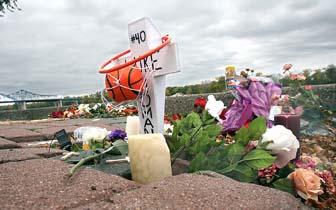
It's easy to shrug off complaints from nervous and suspicious citizens. It's not so easy to ignore another dead body being pulled from the Mississippi. Ed Kondracki's heartfelt hopes and wishful dreams of progress have proven to be useless nonsense in light of Luke Homan's shocking death.
The last time this happened, the chief was trusted. He was listened to. He was given time to investigate this phenomenon and bring it to an end. Town meetings were held, gut-feelings were expressed, and promises were made.
It's become painfully obvious -- there's been no progress. The horror of yet another student-athlete's mysterious drowning is overwhelming.
Kondracki complains the police can't be everywhere, but police were everywhere the night Lucas Homan vanished. They were all over that area. They were on the look-out. And yet they saw nothing.
True, police didn't see a serial killer, but nor did they see an extremely drunk, yet extremely determined young man weaving through the park to his death.
It's hard to accept that by coincidence, Luke happened to have slipped through a crack in the system. If so -- then the system isn't nearly good enough, is it?
And the chief's other recommendations made years ago have similarly turned out to be unacceptable and woefully inadequate. Even if there had been cameras -- and they failed to show a very drunken student stumbling onto the bank -- one suspects Chief Kondracki would say the student must've coincidentally stayed just out of camera range.
But by all means -- Kondracki should put up gates, install cameras, put up lighting, and whatever else he can physically do to prevent this from happening again. None of that however, will change the horror of what's already happened.
It's time for La Crosse to get a new strategy, and I'm not talking about late-night "drunk buses" and anti-binge drinking posters. I'm talking about a strategy to confront the serial-killer that, real or imagined, is threatening the safety of the community.
The solution isn't building fences -- it's tearing down the wall that separates law enforcement from the people they've sworn to protect and serve.
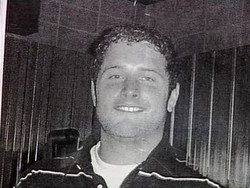
Luke Homan
Too Drunk To Drown
According to La Crosse County Medical Examiner John Steers, tests on vitreous fluid taken from within the eye indicated 21-year-old Lucas Homan's blood-alcohol concentration was an astounding 0.32 percent.
I understand Luke may have been drinking heavily. I understand he may have stumbled away from his friends unnoticed. I understand that once at water's edge, Luke may have accidentally fallen in and drowned. What I don't understand is -- how he got down to the river in the first place.
A guide published on the web charting the effects of alcohol lists the following conditions of an average person with an alcohol level between 0.25 and 0.40 percent:
StuporThe effects of an alcohol level between 0.35 and 0.50 percent are listed as:
General inertia; approaching loss of motor functions
Markedly decreased response to stimuli
Marked muscular incoordination; inability to stand or walk
Vomiting; incontinence
Impaired consciousness; sleep or stupor
Coma
Complete unconsciousness
Depressed or abolished reflexes
Subnormal body temperature
Incontinence
Impairment of circulation and respiration
Possible death

Not Another One
October 6, 2006
The family and friends who love Lucas Homan must be shocked and devastated. Many in the town of La Crosse Wisconsin have been stunned into silence. Reading the headlines about Homan, concerned citizens all over the nation are at a loss for words, except to ask: "Not another one?"
Of course, Luke was never thought of as "another one." He was always known as somebody quite special -- and quite talented. He was a former prep star at Brookfield Central High School, and had transferred to the University of Wisconsin-La Crosse in 2005 after playing basketball for two seasons at University of Wisconsin-Milwaukee.
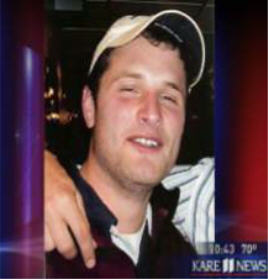
Luke was out with his friends in downtown La Crosse -- drinking and celebrating the community's "Oktoberfest." The last time anyone saw him was early on Saturday morning, September 30. After that, the 6' 4'' athlete disappeared. He had gone somewhere and never come back.
Loved ones spent a horrific weekend searching for Luke. And no one knows what happened to him -- but on Monday, his body was found in the Mississippi river.
La Crosse police figure Homan got drunk and then accidentally drowned. The autopsy report, completed by Dr. Lindsey Thomas, indicates there were no signs of trauma, no signs of a struggle, no signs of foul play.
The one, huge, obvious sign of foul play is that for the last ten years, this same shocking story of a missing college student that turns up dead in a nearby river has played out again, and again, and again, and again in the La Crosse area.
The series of other drownings don't absorb the shock. The disappearance and death of Lucas Homan is a singular, stunning loss. Words fail. Students, friends, parents -- people who've followed this case and the many others like it -- have been rendered practically speechless.
But Police Chief Ed Kondracki had plenty to say. He told a local reporter: "We don't have enough officers to hold hands along the river shore. We can't anticipate where the next drowning is going to be, and unless something is done about binge drinking -- another drowning will occur."
Astounding.
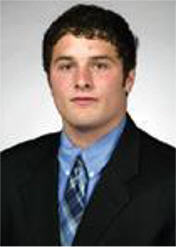
Well, Chief Kondracki should know that community members are starting to find their voice. Folks have begun working to make sure there is not another one.
All I can say is -- if any of the loved ones of Lucas Homan should happen across this website, you should know that a great many people care about you and mourn your loss. Our thoughts are with you and will continue to be. We will not forget Luke. We will not dismiss this.
Luke is not "another one." He is special and unique, and he always will be.
Missing Med Student
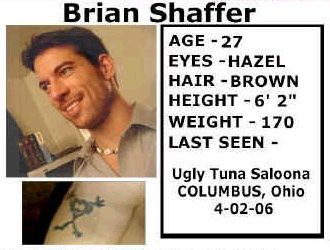
September 25, 2006
In the weeks following the April 1 disappearance of Ohio State University medical student, Brian Shaffer, searchers combed the brush and bike path along the Olentangy river, from Lane Avenue to Confluence Park.
The missing student's father, Randall Shaffer, told reporters, "I don't want to find my son in the water someplace. I'm not saying he's there, and I pray to God he's not."
There was no reason to look in that particular place for clues. Brian had last been seen out at a bar with friends who were celebrating the start of spring break. Never the less, the area was searched and -- like every other place they'd looked -- authorities found nothing.
Brian Shaffer is just -- gone. The 27-year-old is 6 feet 2 inches tall and weighs about 170 pounds. He has hazel eyes and a tattoo of the Pearl Jam symbol on his upper right arm.
Police have no idea what could've happened. Shaffer's mother died shortly before he disappeared, and at one point, his father Randy suggested the stress of her death might have been too much for Brian. But it's now been half a year since anyone's heard from him. Family and friends are sure he didn't simply decide to take off. His car was parked at his apartment. His cell phone and credit cards have not been used.
Clint Florence is the last person to have seen Brian Shaffer. The two used to live together and were out bar-hopping till early on Saturday morning on April 1.
Florence told NBC-4 in Columbus that the men headed to the Ugly Tuna Saloon at about 9:15 PM. At about 10:30 Brian spoke with his girlfriend by phone. At 11:00 the men walked to the Short North Tavern, and at 11:40 they walked to another bar. Around 1:15 they returned to the Ugly Tuna.
Florence said while he was drinking, Brian periodically walked away to talk with some people he knew. Shaffer was last seen on surveillance cameras at about 2:00 AM.
"Brian got up with them. I am assuming he got up with them, walked out with them to talk with them on the foyer before going on the escalator . . . I called him that night and it went straight to voicemail. It was about 2 a.m. and -- no answer," Florence said.
At closing time, after looking for his friend, Clint Florence left the bar. "Of course, I regret now leaving, but I didn't think anything of it. I didn't think Brian -- that anything happened to him because he is known to walk away," Florence said.
Nobody wants to believe Brian met with foul play or had a fatal accident -- but he was certainly not known to stay away. Brian Shaffer's total disappearance has now become an agonizing mystery.
Randy Shaffer said vanishing is just not like his son and described him as an exceptional student, noting, "His idea of a bad grade is to get an 83. The last time my wife was here, he was in the top 10 of his class. I don't know where he's at now but not that far behind. He's such a smart kid."
Brian was supposed to leave that Monday morning for a spring break trip with his girlfriend, Alexis Waggoner. She immediately knew something strange had happened.
"I was kind of starting to worry Saturday night. And by Sunday morning when I hadn't heard anything, I was really thinking there was something wrong," said Waggoner, who then contacted his family and called police.
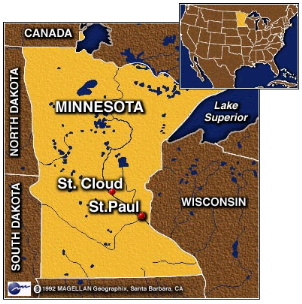
Wednesday, March 1, 2006 -- The St. Cloud Police Department said the body of missing St. Cloud State University student Scot Radel was found in the Mississippi River at about 1:45 PM. Chief Dennis Ballantine told reporters there was "no evidence of foul play," and that there were no obvious signs of injury. Radel's cell phone, keys, watch and wallet were found on his body.
"Now we have to figure out how he ended up being in that river. I don't know
if we'll ever find out why, but we will follow up on evidence that comes in."
-- Police Chief Ballantine
"How could Scot Radel get disoriented on the streets in a town where he had been attending college for years? Why did he head for the river, blocks away from where he was last seen? How could he have tumbled down a riverside embankment where it would be difficult to fall into the river?"
-- questions raised by Allan Radel in a
March 3, 2006 Star-Tribune Article
Allan Radel:
"I think he was disoriented and got into a vehicle, either voluntarily or involuntarily. At some point, I believe Scot recognized he was in trouble. Obviously, he was overly intoxicated and disoriented. He was vulnerable.
"I think once he recognized what was going on -- he was a pretty tough kid, a wrestler -- he managed to get away. He ran out of fear and maybe didn't know where he was going, even that he was going toward the river. He went rolling down that pretty steep hill. When he got to the bank, he didn't want to go back up toward who he was running away from.
"Directly across the river is a lighted stairway. He's on the ice and heads toward it, not realizing there was open water ahead of him. He goes in the water and [swims] as far as he could -- he was a terrific swimmer, very strong. But the water was cold, he had shoes on. So he swam until he couldn't anymore.
". . . I believe predators are preying on students who are leaving the downtown bars in St. Cloud pretty intoxicated."
"I'm disappointed his father feels that way.
There's absolutely no evidence anything like that is happening."
-- St. Cloud Police Sgt. Jerry Edblad
KSTP News in Minneapolis filed a report on February 18, 2006 with the headline:
"Jenkins Case May Not Be Closed"
University of Minnesota student Chris Jenkins vanished on Halloween, 2002. His remains were recovered in the Mississippi River four months later. Since no obvious signs of foul play were found, detectives determined Chris' death to have been an accident.
Chris parents, Jan and Steve Jenkins, never felt Minneapolis police did a thorough investigation. They don't believe their son simply got drunk, walked into the river and accidentally drowned -- because no obvious signs of an accident were found. The KSTP article lists some of the troubling items:
The exact location of Chris' body. "If he came from upstream, that points towards foul play," says Steve Jenkins.
The condition of the shoes and clothing. Jenkins commented, "His shirt was tucked in, and drowning victims' shirts are not tucked in."
The exact poition of the body. While most drowning victims float face down, Chris' body was on its back, arms folded across the chest. "What this should say is, in our minds, there's a red flag the size of Texas . . . Something's wrong with the picture," says Jan Jenkins.
KSTP caught everyone off guard with word from Assistant Police Chief Tim Dolan that the case is not completely closed. "It's fairly cold. I can't get into specifics, but it's not as cold as others," Dolan reports. "If we can ascertain where Chris may have entered, or may not, that's all the better . . . Right now we're looking for all the information we can get on that case."
Jan Jenkins is quoted as saying, "For the first time since Chris' disappearance and death, I will feel as if his life -- his death -- have been dignified by an investigation."
Research from visitors to this site has revealed several
names of young men who have inexplicably gone missing.
Two of those cases stand out as being situations that have
notable -- coincidental -- similarities to the other cases
mentioned on this web page.
Ryan Katcher
Late on Nov. 5, 2000, Ryan Katcher was driven to his Oakwood, Illinois home by a friend. He vanished. Neither the University of Illinois sophomore nor his Ford F-150 truck have ever been located.
Gary Miller, Vermilion County sheriff's chief investigator commented on the investigation:
"We don't suspect foul play (in Ryan's case), but we don't have enough information to rule out anything. We know he was taken home from a party by a friend and we know absolutely nothing after that about where he went . . . He was there and then he was gone and there are no clues. It's a total mystery."
Ryan's mother, Linda Katcher Griffith is still searching for her son, who at the time was described as a 5-foot-6-inch, 160 pound, blond, blue-eyed, 19-year-old.
Justin Hayduk
Justin Hayduk, was last seen in the early hours of March 10, 2001 in Morgantown, West Virginia where he'd gone for spring break. He and a friend had been drinking at a fraternity party and after leaving, they were stopped by a police officer. Justin ran from the scene and then vanished.
"You see a lot of things on a college campus on a Friday or Saturday night," West Virginia University's police chief, Bob Roberts commented. "We didn't have a reason to pursue him."
When last seen, 18-year-old Justin was described as having brown hair and eyes, 140 pounds, 5 feet 7 inches tall, and wearing a tan vest over a white shirt, with blue jeans and cap.
The only lead police had was the white baseball cap, discovered March 13, 2001 on a bank of the Monongahela River.
Justin's parents, Mike and Cheryl Hayduk spent months searching for the University of Pittsburgh student. Then, on May 24, 2001, medical examiners in Charleston positively identified a body found in the Monongahela River as the missing freshman.
Justin Hayduk was a 2000 graduate of Chambersburg High School and was attending college on academic scholarship.
"They drank hard and partied long, then stumbled into the night with a sense of bravado, clueless to the danger ahead."
-- Richard Meryhew's Star-Tribune article, "One last sip, One last step"
Clueless?
Scot Radel's baseball cap
February 19, 2006
The La Crosse County Medical Examiner has carefully analyzed the phenomenon of missing/drowned students and concluded the coincidental deaths are just a big joke:
"Yes I believe all the evidence suggests that there is a KILLER amongst us. And these men are dying at the Killer's hands along with thousands of other victims every year, and that Killer has a name, his name is Al Cohol."
A February 11, 2006 article in Minneapolis' Star-Tribune about the odd disappearance of Scot Radel includes quotes from several other Midwest officials. Though none are quite as funny as the La Crosse M.E., the public servants are similarly dismissive of the possibility that these strange drownings are not simple drinking accidents.
Stearns County Sheriff John Sanner led the search for Josh Guimond, the still missing St. John's University student. Sanner cites the idea that many Midwest campuses are near a river. "It'd be no different than having a university sitting at the edge of the Grand Canyon, and then all of a sudden having these students fall to their death while sitting on the edge of the Grand Canyon."
Gary Foster, Deputy Police Chief in Eau Claire, Wisconsin where several students have vanished, figures "once they get disoriented, or get into an environment or a riverbank or something that's really treacherous, bad things happen."
If it weren't for the seriousness of the issue, those comments would be laughable.
Generally speaking, all of the missing student's stories are alcohol-related, but it is not clear what specific role alcohol played in each case.
Scot Radel had reportedly been drinking with friends the night he went missing. Officials were quick to point out that alcohol was likely a factor. But alcohol consumption alone can't explain away his sudden disappearance.
Scot's family and friends describe him as an especially meticulous, trustworthy and stable young man. They're certain he did not wander off.
Photos taken of Scot shortly before he disappeared prove he was not falling down drunk. He was not so "disoriented" and "clueless" that he wouldn't recognize a river. He was on the phone speaking with friends at the time he vanished.
Scot's roommate Tony Hartle, who has known Scot since kindergarten, doesn't believe alcohol alone is behind his friend's disappearance. He gave reporters his assessment based on the specific facts of the situation:
"I don't think he went freely. It wasn't a drunken stupor walk into the river -- I'm not saying that's what happened -- I'm just saying there's another key element. There's somebody else involved here. . . Somebody put him into this situation."
The La Crosse M.E. may not agree, but Tony Hartle's words echo a conclusion that many, many people who've seriously looked at these cases have come to. Along with the alcohol, some other thing or some other person must be involved.
Tuesday, February 14, 2006 -- Police locate Scot Radel's baseball cap in the Mississippi River near a dam by St. Cloud State University. Police Chief Dennis Ballentine says he's confident Radel's body is in the river, but the search has been called off because of unsafe ice. The river search likely won't resume until spring.
"I know there is no way my son simply walked out into the river . . .
There's more to the story than this. It doesn't end here."
-- Scot's father, Allan Radel
Missing Persons Report

On February 13, 2006 the St. Cloud Times reported there was nothing to report about Scot Radel, the St. Cloud State University student who vanished the night of February 2. The only tidbit of news was that footprints police had found near the river appeared to be those of someone running.
Scot's family is worried sick. His dad, Allan Radel said, "Not knowing where your son is -- this is hell." The missing 21-year-old may be alive and well, but after a week and a half of intense searches, it's hard to hold out hope for a happy ending.
"I think something happened to him downtown on Thursday night. What happened to him, I don't know," said Jeff Radel, Scot's brother.
St. Cloud police seem just as baffled.
"Let's be honest, we're getting to the point where something bad has happened, whether accidental or otherwise. But we have absolutely no evidence whatsoever that he was attacked or abducted or anything like that," said Police Chief Dennis Ballantine. "Usually in a case like this someone would say 'oh we saw him here, we saw him there.' We're not even getting those. It's like he just vanished."
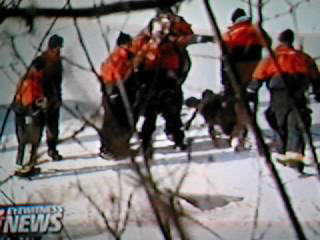
Along with the brief Radel article, the St. Cloud paper featured a story with the headline: "Heaps of Overtime Drain Police Force." Reporter Kari Petrie notes that in 2005, the department had almost 20,000 hours of overtime -- the equivalent of more than nine additional full-time officers. Asked about lost money and morale, Chief Ballantine commented, "It's absolutely a huge concern."
The juxtaposition of the Times' two news items point to the tremendous difficulties involved in solving missing person cases.
About 200,000 American citizens go missing every year. Some run away, some lose their way, some are taken away. Most are quickly found. But many people who disappear -- especially young adults -- are never recovered, mainly due to inefficient and ineffective law enforcement.
Family and friends of the missing face three major obstacles.
Problem #1: It's not a crime to go missing. People aren't obligated to be where others expect them to be. Overworked, understaffed police departments have their hands full with crimes, so unless the missing person is a small child or there are obvious signs of foul play, a reported disappearance will not be a priority.
Problem #2: Poorly trained police mishandle missing person cases in the critical first 24 hours of the investigation. Also -- authorities often don't do an aggressive follow-up.
Problem #3: Information about people who've vanished is not sent to the appropriate central data bases, or never sent at all. Even when records and reports are properly placed into the computers run by the Justice Department's National Crime Information Center, it's often a meaningless gesture. The system is terribly outdated and practically useless to busy detectives.
The solution -- at least part of it -- is for people to communicate their concerns to police, politicians and the press. It would also be helpful if responsible citizens donated their attention, time and money to a local or national missing persons foundation.
"I want my son back, he's a good kid. I love him dearly. We just want him back and we want some help."
-- Allan Radel
Making A Connection
Where is Scot Radel?
February 6, 2006
The last contact Scot Baek Radel made with his roommates was by cell phone, on Thursday, February 2 at around at 11:30 PM. He's been missing ever since. The 21-year-old St. Cloud State University junior is described as a Korean male, 5-foot-5, 145 pounds with brown hair.
While most of the students counted among the Midwest missing/drowned cases have been White males, the developing mystery of Scot Radel is strikingly similar to their stories in other ways. For one thing, the noted high school wrestler was not the type of person to wander off alone. Danielle Saufferer, Scot Radel's girlfriend said, "He always called when he said he was going to call. He always told everybody where he was going and he was always with his friends."
St. Cloud police say searchers found several shoe prints along the frozen Mississippi River that may have belonged to Scot.
Minnesota's WCCO-TV News is reporting the following:
Radel was supposed to meet his roommates at the Press Bar and was asking them for directions, police said. Radel told his roommates he had left McRudy's Bar and Pub and could see the Paramount sign and a bank from where he was standing at the time of the call.
Roommates said after a few phone calls back and forth, his phone went dead, and he is not believed to have contacted anyone since.
Allan Radel, Scot's dad said, "There were three phone calls back and forth, but Scot seemed to be disoriented and going the wrong way and he didn't make a connection."
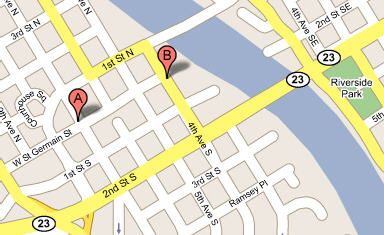
McRudy's Pub -- 715 W Saint Germain St.
The Press Bar -- 502 W Saint Germain St.
THE ONE THAT GOT AWAY?

January 12, 2006
Rumors are flying all over La Crosse about a University of Wisconsin student who says he had a near-death experience in the river. In a most remarkable story, the as of yet unidentified man claims he was drinking with friends in a downtown bar until about 1:45 AM on Sunday, January 8 -- but then somehow ended up in the middle of the Mississippi.
He doesn't know how he got in the water, but he knows how he got out.
According to an article in the La Crosse Tribune, the student "found himself in the river, fighting a strong current that was rapidly carrying him downstream. After an estimated 15 minutes, he was able to grab onto a tall concrete structure and pull himself to shore, where he likely passed out . . ."
Around 7:00 AM that morning, the 21-year-old showed up at a nearby hospital. Confused, covered in mud, and missing his shirt and shoes, he was unable to provide any details of what had happened to him.
Apparently no one witnessed the incident or any of the events that led up to it.
If true, the student's bizarre experience may provide investigators with valuable information and insights into the drowned student phenomenon. Over a seven-year period, seven young men from La Crosse went missing and were subsequently found dead in area rivers.
The Tribune quotes police chief Ed Kondracki as being "relieved and pleased to know the man survived, but disappointed to hear another intoxicated young man had fallen into the river."
Not so fast, Chief.
No one should be relieved or pleased about this story. How do we know the man FELL into the river? Maybe he did, but then, why can't he recall where, when or how? Something doesn't add up here. Was he, in fact, ALONE the entire time?
Chief Kondracki may be relieved, but I'm unnerved to hear that -- as in so many of these mysterious cases -- this student had somehow become separated from his hat, coat, shoes and cell phone.
It Happened Again
October 16, 2005
On the evening of Friday, October 7, Albert Campbell was laughing and talking with friends over drinks at the "Cactus Grill Cantina Restaurant" in Potsdam, N.Y. Around 9:00, he decided to walk home. That was the last time anyone saw Albert Campbell alive.
The 22-year-old Clarkson University grad student vanished into thin air. All anybody could determine was that he never made it home -- which was odd since his apartment was only a block away. Scores of people searched the Clarkson campus, downtown Potsdam and other areas of St. Lawrence County with no success.
Then on Sunday morning, Albert Campbell's body was recovered about a mile from the Cactus Grill. His remains were pulled from the Raquette River.
Authorities determined Campbell's death was an accident but police say they're unsure how he found his way into the river. "Alcohol seems to have played a significant factor," Chief John Kaplan said.
Albert Campbell
News of Campbell's death alarmed many Clarkson students, area residents and police. It wasn't just word that the mysteriously missing student was found dead in a river, but the fact that an almost identical incident had made local headlines last year.
Speaking to reporters, Police Chief Alan Mulkin of neighboring Canton, N.Y. remarked, "Myself and one other officer from my department came over to assist on this case. The case clearly has similarities to the case involving Adam Falcon which occurred back in November of last year."
On the evening of Friday, November 12, 2004, Adam Falcon was laughing and talking with friends over drinks at the "Tick Tock Inn" in Canton. He went missing and his whereabouts were unknown until six days later when the 20-year-old St. Lawrence University student was located in the Grasse River.
"I thought back to the other guy that drowned from SLU," one Clarkson student told reporters. "I just kept thinking, oh my-gosh, it happened again."
Some members of Albert Campbell's family say they find it hard to believe he would just walk into the river. In the total absence of any other information, it's impossible to know what happened. The confusion of not knowing can only add to the family's heartache.
The warmest of wishes and deepest of sympathies go out to the family and friends of Albert Campbell.
PHI STIGMA
two alcohol-related deaths linked
to Phi Sigma Kappa frat house - 2005
Students Behind Bars
On October 9, 2005, seven Phi Sigma Kappa members were arrested in the death of Patrick Kycia. Moorhead police said the students face various charges including selling liquor to a minor resulting in death, selling alcohol without a license and procuring alcohol to a person under 21 years old.
Kycia had a blood-alcohol level of .17 at the time of his death, more than twice the legal limit for driving in Minnesota. Although at least one fraternity member admitted to selling beer at the party, the fraternity still officially claims that none of its members served Kycia any drugs or alcohol.
The cause of Patrick Kycia's death has been listed as "freshwater drowning."
SEPTEMBER 28, 2005
You hope that somehow, there's been a terrible mistake.
Maybe the missing student had too much to drink and stopped at a friend's house to sleep it off. Maybe he got disoriented and fell asleep after wandering down a side street. Maybe he decided to go on a last-minute road trip out of town and doesn't realize his family and friends are desperately trying to find him. Maybe he's alive somewhere.
You hope -- against all hope -- that things aren't what they seem to be. And then, word comes that the student has been found dead in the river.
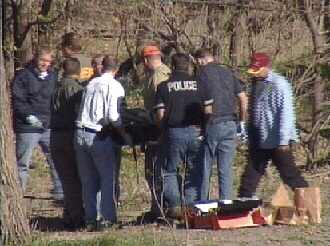
Body found in search
believed to be missing studentAssociated Press
Tuesday, September 27, 2005
MOORHEAD, Minn. (AP) - A body found Tuesday in the Red River was that of a missing Minnesota State University Moorhead student, the student's mother confirmed.
Patrick Kycia, 19, of Stillwater, had been seen last in the early morning hours on Friday at a fraternity party.
There were no obvious signs of trauma, police Lt. Bob Larson said.
Needless to say, Patrick Kycia's parents are desperate for answers. "We still don't know how he got there," said Kycia's mother, Rose Foley. "But we found him. That was our goal. For that, I'm grateful."
The basic facts of this case are no different than the many, many other missing/drowned student cases -- and no less perplexing.
Kycia's body was discovered by a search and dive team near a wooded area where one of his shoes was found a day earlier. The spot was about two miles from where his wallet had been previously found.
Kycia's body showed no obvious signs of physical trauma.
Witnesses expressed disbelief about the death, saying the night he went missing, Kycia had been drinking, "but could still walk a straight line."
Kycia was well-liked, well-adjusted, and had a 3.65 grade-point average.
"He had paid his next two months' rent in advance, was excited about his classes and his job, really was looking forward to a great year," said Patrick's father, Julian Kycia.
"At this point, I'm not going to rest until I can find out what happened."
I understand that he probably got very drunk. I understand he was likely weaving along the streets walking towards home. I understand after ending up down by the river that he fell in and was unable to save himself. What I don't understand is -- how he got there.
Minnesota Mystery
Monday, September 26, 2005
While officials comb the Red River, Moorhead police continue to search for Patrick Kycia, a Minnesota State University student who has been missing since early Friday morning -- September 23.
Patrick Thomas Kycia (KYE'-shuh), 19, was last seen at a Phi Sigma Kappa party about eight blocks from the house he rents with three other students.
At 3:52 AM, roommate Travis Fanum received a call on his cell phone from Kycia’s cell phone. Kycia said nothing during the 15-second call. His wallet, with cash and bank cards still in it, was found about three blocks south of the frat house at 611 10th Street.
Kycia's father, Julian Kycia, said the disappearance was out of character. "He doesn't miss classes, and he doesn't miss work," he said.
Kycia is about 6-feet, 1-inch tall, weighing about 230 pounds. He was last seen wearing a gray MSU sweatshirt and blue jeans.
The FBI has joined the search.
When Your Child Is Missing:
A Family Survival Guide
U.S. Department of Justice
http://www.ncjrs.org/html/ojjdp/204958/index.html
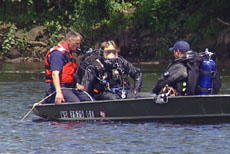
Finding Josh Snell
June, 2005
Searching for Answers
Two shirts. That's all that was left of Joshua Snell.
The 22-year-old had been missing since early Sunday morning, June 12. On Monday, searchers looked everywhere and checked with everyone, but all that was left of Joshua were two of his shirts -- found along the bank of the Chippewa River.
After Tuesday's searches failed, people began to fear the worst. It wasn't like Josh to disappear.
When last seen, Joshua Snell -- 5 feet 10 inches tall, 165 pounds -- was wearing a tan, plaid, long-sleeved, button-down shirt and khaki pants. He was playing pool and drinking beer at "Brothers Tavern" in downtown Eau Claire, Wisconsin.
According to Matthew Starland and other acquaintances, Josh planned to visit a female friend after leaving the bar. Around 2 AM, Josh called the woman from his cell phone and told her he would soon be arriving at her home.
"He never showed up," said Starland -- one of Josh's friends who quickly realized something was terribly wrong and notified authorities of his disappearance the next day at 5 PM.
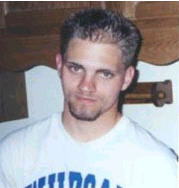
Four days later, on Wednesday evening, Joshua Snell's body was discovered in the Chippewa River, lodged among downed trees located less than two miles from "Brothers Tavern."
Preliminary autopsy results from the Eau Claire County medical examiner's office indicate the cause of Joshua Snell's death was drowning. The cause of his disappearance remains a mystery.
Suicide seems highly unlikely. Those who knew him describe Josh as a stable and "giving person" with "strong religious convictions." Family friend, Jesse Gamble said, "He was certainly looking forward to the rest of his life. He was a happy person."
Investigators say there are No Signs of Foul Play.
Eau Claire Police Lieutenant John Arnette believes Joshua drunkenly wandered down into the river, lost his way in the water, and then died. According to him, these drunken drownings happen in the area once or twice a year.
"It's pretty dark at nighttime. They can get confused, disoriented," Arnette explained to reporters. "They get in the water and they might think they are coming back to shore when in reality they are moving to the middle."
Speaking of reality . . . people don't just "get in the water" at 2 in the morning. Josh lived in Hastings, Minnesota, but was very familiar with Eau Claire having attended Immanuel Lutheran College. He'd gone back that weekend to celebrate a friend's wedding -- not to kill himself .
In reality, witnesses say Josh was not extremely intoxicated, and certainly not so drunk and confused he wouldn't know the difference between land and water. He had spoken with a friend on the phone just prior to vanishing.
Strange accidents do happen, and perhaps Joshua Snell -- strangely, accidentally -- drowned himself. But, there are at least two very real signs of foul play here: the two shirts Josh left in Owen Park along the west bank of the Chippewa.
Craig Burrows went missing in September 2002 in Eau Claire. A week later, he was found dead in Half Moon Lake.
University of Wisconsin student, Michael Noll disappeared November 6, 2002 after leaving a bar. In August, the 22-year-old's body was discovered in Half Moon Lake.
On the Edge
Josh Snell is one of several young men who, in the last year, have disappeared and drowned under -- arguably -- suspicious circumstances. Although these cases don't fit this website's general profile of the typical "Midwest missing student" deaths, it's worth noting that in the 2004 - 2005 school year, 5 or more college-aged men have gone missing only to later turn up in local waterways.
Patrick M. Welsh, 22, York College of PA student who disappeared in April 2005 during a visit to New York City and was found in the Hudson River in early June.
University of Maryland student, Arvin Sharma, last seen early Saturday April 16, 2005 at a nightclub. The family voiced suspicions when, weeks later, Arvin's remains were located in the Anacostia River.
Christopher S. Thiem, 19, was spotted by a policeman near a railroad bridge in Vincennes, Indiana on January 12, 2005. He was apparently the last person to see Christopher alive after he'd left a campus party. He vanished and his whereabouts were unknown until April, when workers planting trees discovered the body of the Vincennes University student.
The Carmi Times reported:
"An officer pursued Thiem on foot through some yards and a field to a railroad trestle across the Wabash River, which Thiem began to walk across ... [a witness] recalled that the Wabash River was at one of its highest levels ever recorded in January and surmised that the backwater washed Thiem's body onto the farm field, where it remained after the water receded."
Christopher Thiem
1-800-THE-LOST
National Center for
Missing & Exploited Children
Drowning in Coincidence
Link to UPDATES PAGE - 2
Link to BACKGROUND PAGE

Vance Holmes.com / court
And Poetic Justice For All
Thank You for supporting this site. . .